Confident and authoritative border crossing and the solidity of resurrection
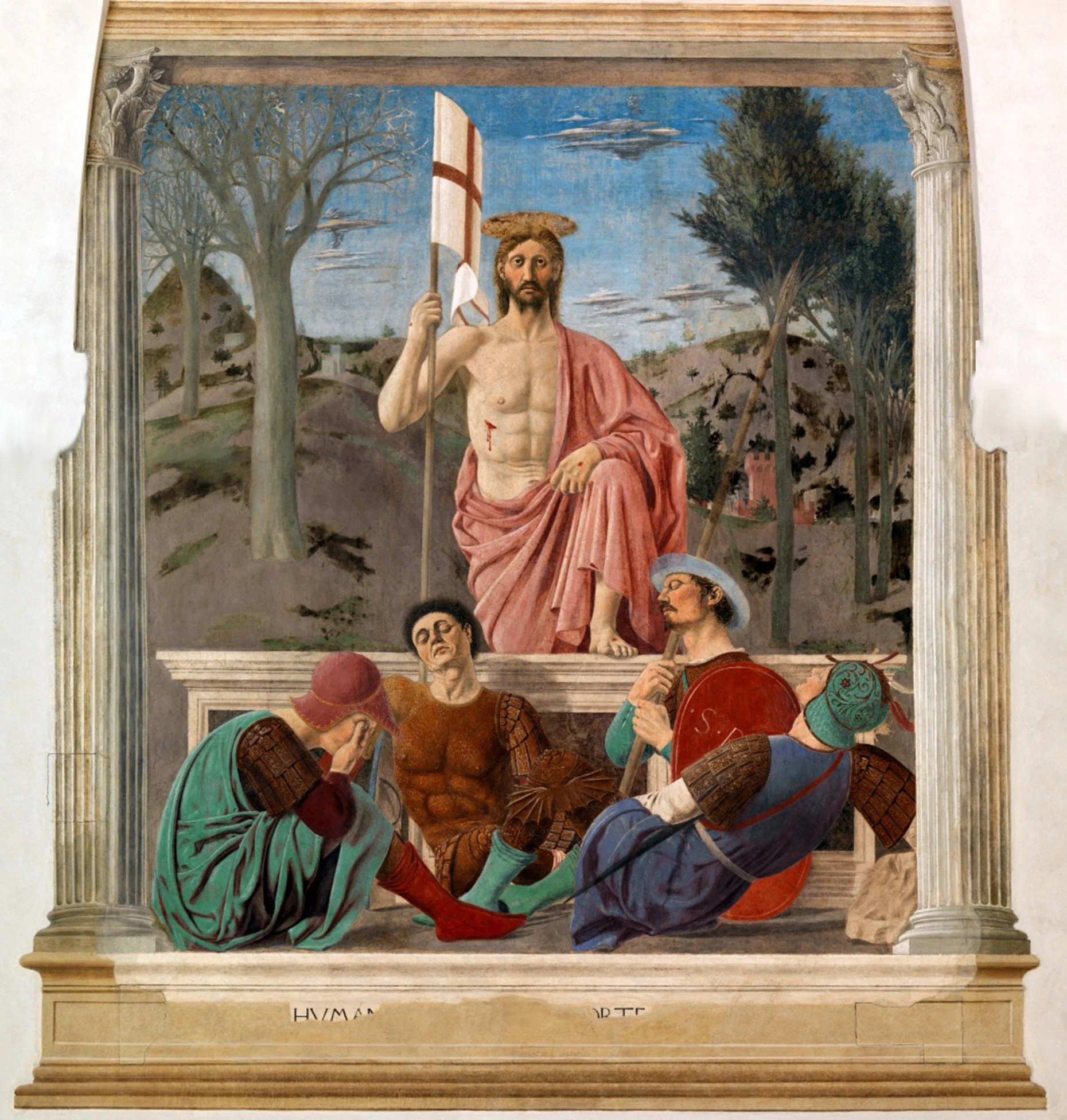
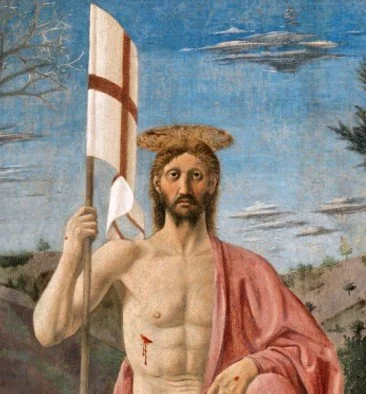
Piero della Francesca’s fresco painting, The Resurrection (c.1463-5), situated in the former civic hall in the Tuscan town of Sansepulcro, shows the triumphant Christ arising from his tomb on the third day after his death. This is a solid, monumental and assertive Jesus.
Anchored to the tomb by his left leg and the resurrection flag in his right hand, he appears to be using them both to raise his other leg out of the tomb. In doing so, he flexes the muscles in his abdomen, emphasising the palpable reality of his body. The sleeping soldiers below are complexly intertwined and create a triangle from the top of Christ’s head through to the lower corners of the painting. This, together with the symmetrical layout of the painting, with the horizontal edge of the tomb and trees on either side, serves to further anchor the eye and give weight to the composition.
This Easter image portrays Jesus in peak physical condition, like a prize-winning boxer exiting the ring. As such, it contrasts strongly with the events associated with Holy Week, when Jesus was betrayed, tortured, and humiliated, his body broken …
Protector of identity and boundaries
In addition to being a triumphant depiction of the risen Lord, the fresco itself has a fascinating story of survival. In his essay written in 1925 titled, “The Best Picture” Aldous Huxley described it as “the greatest picture in the world”. The memory of this statement later caused a British artillery officer to decide not to shell the town during World War Two. The painting, and the town, survived. In fact, the painting was discovered after having been covered over with plaster for two centuries (for reasons unknown), yet it remained beautifully intact, beneath.
Indeed, the subject matter – the undefeated Christ arising from his tomb after his death – may be a reference to the successful establishment of the town itself, which was named Sansepulchro after the Holy Sepulcher (the tomb that Christ was buried in). The presence of the large stone in the lower right corner of the fresco supports this, as it may represent the relic of Christ’s burial place reputedly brought by the saints who founded the town.
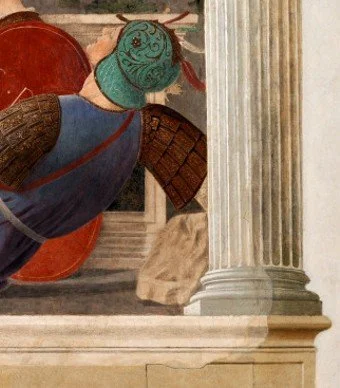
I am struck by the fresco’s sense of order and control, victorious subject matter and extraordinary survival story. The image is a defiant assertion of the certainty of eternal life after death, at a time when the plague stalked the towns of Tuscany. For the councillors who met in the civic hall for which it was commissioned, Piero’s painting would have been an important symbol of civic identity, and its portrayal of strength and composure may have inspired good governance.
And for the inhabitants during the Second World War, it must have seemed as though their resurrected Christ had literally saved them from destruction, standing sentinel over their settlement and marking its boundary defences.
Jesus: Borders and edges, rounded and vulnerable
Over the centuries, this supreme depiction of the resurrection of Jesus has acted as a powerful cultural marker and protector of identity and boundaries, and as a means of promoting and maintaining prominence, security, order, and certitude. As such, it reflects a highly controlled and ultimately narrow way of seeing Christ: on the contrary, Jesus was a non-dual thinker who emphasised his own humanity, identified with the poor and broken, taught in stories, parables and enigmatic sayings, and operated outside the control and understanding of others*. This makes me wonder:
What image of Jesus resonates with me this Lent?
Do I over-localise God’s action in one place, forgetting that he is available everywhere and all the time, straddling the perceived borders of time, space and physicality?
Am I open to a “Beaten” God?
Tom Ingrey-Counter
References:
*Paraphrased from “The Naked Now” by Richard Rohr
https://smarthistory.org/piero-della-francesca-resurrection/