• Home
  • Reading creation
  • Contemplative paths
  • Trails
  • Open, quiet spaces
  • Biblical journeys
  • Expeditions
  • Project introduction
  • Installation ideas
  • Topics
  • Reflections
  • Groups
  • The Coracle Vision
  • Testimonials
  • How did it all begin?
  • Our trustees
  • Our guiding principles
  • Coracle, a symbol of faith
  • Contact
  • Links
  • Support
Menu

The Coracle Trust

Inns on roads
Islands on seas
Transitioning in faith through the life stages
Exploring faith in the everyday

Your Custom Text Here

The Coracle Trust

  • Home
  • Paths & Spaces
    • Reading creation
    • Contemplative paths
    • Trails
    • Open, quiet spaces
    • Biblical journeys
    • Expeditions
  • Transition gardens
    • Project introduction
    • Installation ideas
  • Topics
  • Reflections
  • Groups
  • About
    • The Coracle Vision
    • Testimonials
    • How did it all begin?
    • Our trustees
    • Our guiding principles
    • Coracle, a symbol of faith
    • Contact
    • Links
    • Support

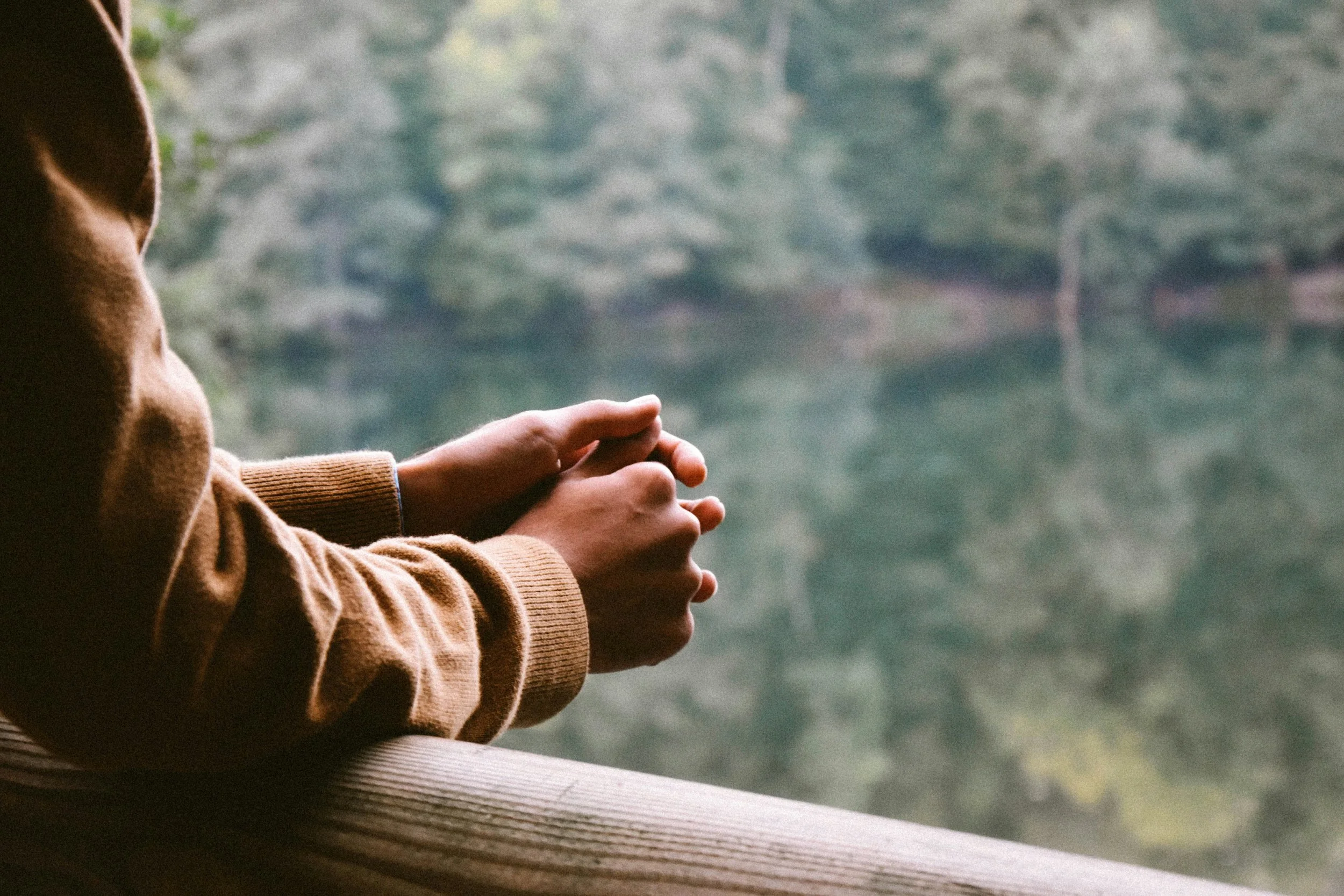
Waiting patiently in expectation is the foundation of the spiritual life

December 4, 2025 Andrew Hook

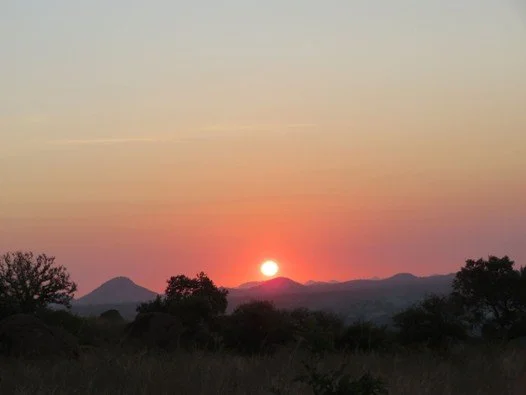
Fahrul Razi, unsplash.com

Do not cite the Deep Magic to me, Witch. I was there when it was written [and] there is a magic deeper still which you do not know. Your knowledge goes back only to the dawn of time. But if you could have looked a little further back, into the stillness and the darkness before Time dawned, you would have read there a different incantation. Aslan (paraphrased): The Lion, the Witch, and the Wardrobe by C.S. Lewis

There is a kind of seeing that becomes possible only in the stillness and the darkness. And it is given as we learn to consent, often gradually and through great personal struggle, to the slow work of God in our lives and in the world entrusted to us.

From the very beginning, the book of Genesis speaks of the whole Created order arising as one full cycle of darkness and light. Evening came and morning came and it was the first day (Genesis 1:3).

Here is the deeper magic that runs thread-like through the gospel Jesus lived and proclaimed. Nowhere do we find him asking his followers to avoid the complex shadows of what it means to be fully human. Rather, he makes plain the uncomfortable and painful truth that all of it is a tangle of darkness and light, and he shows by example how we also are to carry it patiently through to resurrection.

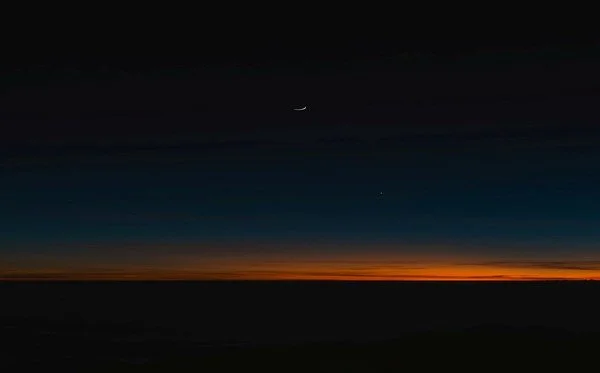
Anton Darius, unsplash.com

It is a struggle which Jesus himself was willing to embody, walking among us and becoming the numinous light in the darkness.

It asks us to move slowly.

It asks us to deepen awareness.

It asks us to hold paradox.

It asks us to open our hearts.

It asks us to live the mystery.

“By the tender mercy of our God, the dawn from on high will break upon us, to give sight to those who sit in darkness and in the shadow of death, to guide our feet into the way of peace.” (Luke 1: 78-79)

Lynn Darke

Walking in darkness

November 27, 2025 Andrew Hook

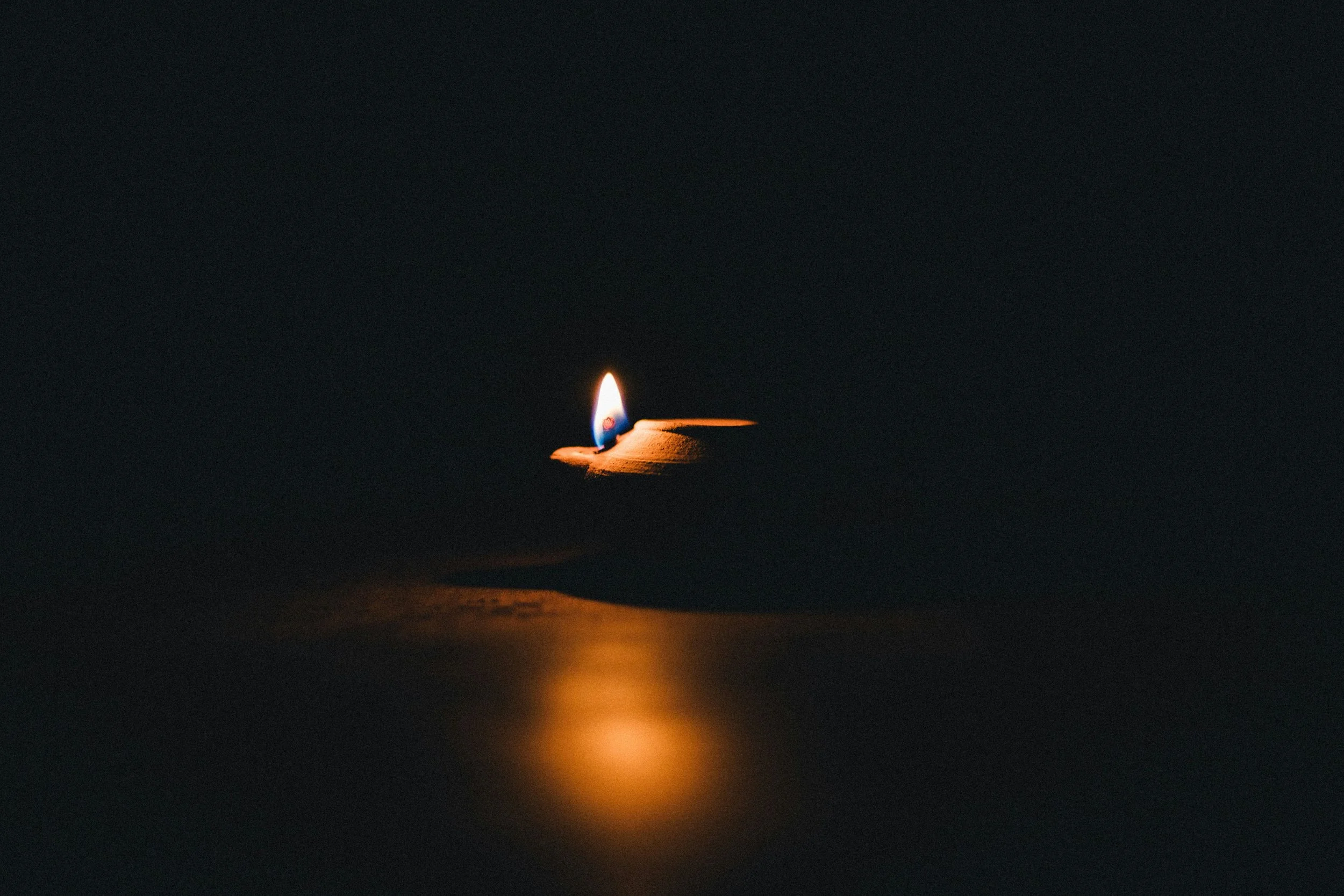
Gadiel Lazcano, unsplash.com

Strangers to darkness

In pondering again the various gospel accounts of what we call the Christmas story I'm struck, strangely for the first time, by how predominantly dark it would have been as these events played out. We're so accustomed to living with electricity, with light on demand at any time of day or night that we're pretty much strangers to darkness being a constant, darkness as a presence at the edge of the small localised glow of whatever candle or oil lamp I might be able to light.

How dark and gloomy must that stable have been where Mary lay and gave birth. No hyper-illuminated medical centre, scrubbed and gleaming but a bed in the straw and at best an oil lamp or a couple of candles. She and Joseph likely arrived after dark too as the inn was already full. With no streetlights, no battery-run torches, no security lighting at the back of the inn, a woman on the brink of childbirth makes do in an unfamiliar, dark place.

The Magi too must have seen darkness as a friend rather than something to be avoided else how could they have followed the star? Journeying by night to an unknown destination in an unfamiliar land in starlight at best, one bright star a guiding presence.

And those poor unsuspecting shepherds, settling down for the night near their flocks, only starlight perhaps giving them any sense of their surroundings. Then the sudden, terrifying intrusion of light all around them. Eyes deeply attuned to the darkness of night suddenly, blindingly dazzled.

An invitation to slower and deeper

I wonder what we've lost by having instant and unthinking access to light pretty much anywhere, anytime. And in a way that, as unthinkingly, can turn night into day. Since I stopped working and the rhythm of my weekdays isn't kick-started by the early morning alarm, I've noticed how much I've enjoyed the dark months, how I welcome the gradual fading of the light through September and into October. It really does feel like an invitation into some slower, deeper rhythm of living, sleeping longer, being less active. The darkness feels like rest for the eyes, a counter-balance to the sunlight and long daylight of summer. Part of a welcome annual rhythm. In the morning, my practice in the dark months is to use no electric light but light a candle or two and open the curtains and blinds and wait for, and watch, the gathering light as the sun returns.

There's an implicit narrative in many of our stories and myths that dark equals bad and light equals good. That feels not only too simplistic to me but also misses the point that we need both and indeed one would have no meaning without the other. Can we relearn to welcome the dark? To invite the new ways of seeing and being that might be an invitation when the light fades?

Maybe walking in darkness isn't a bad thing. Maybe there are things to be seen and learned and known there too.

Gus MacLeod

Advent 2025: Introduction

Pre-advent: Waiting

November 13, 2025 Andrew Hook

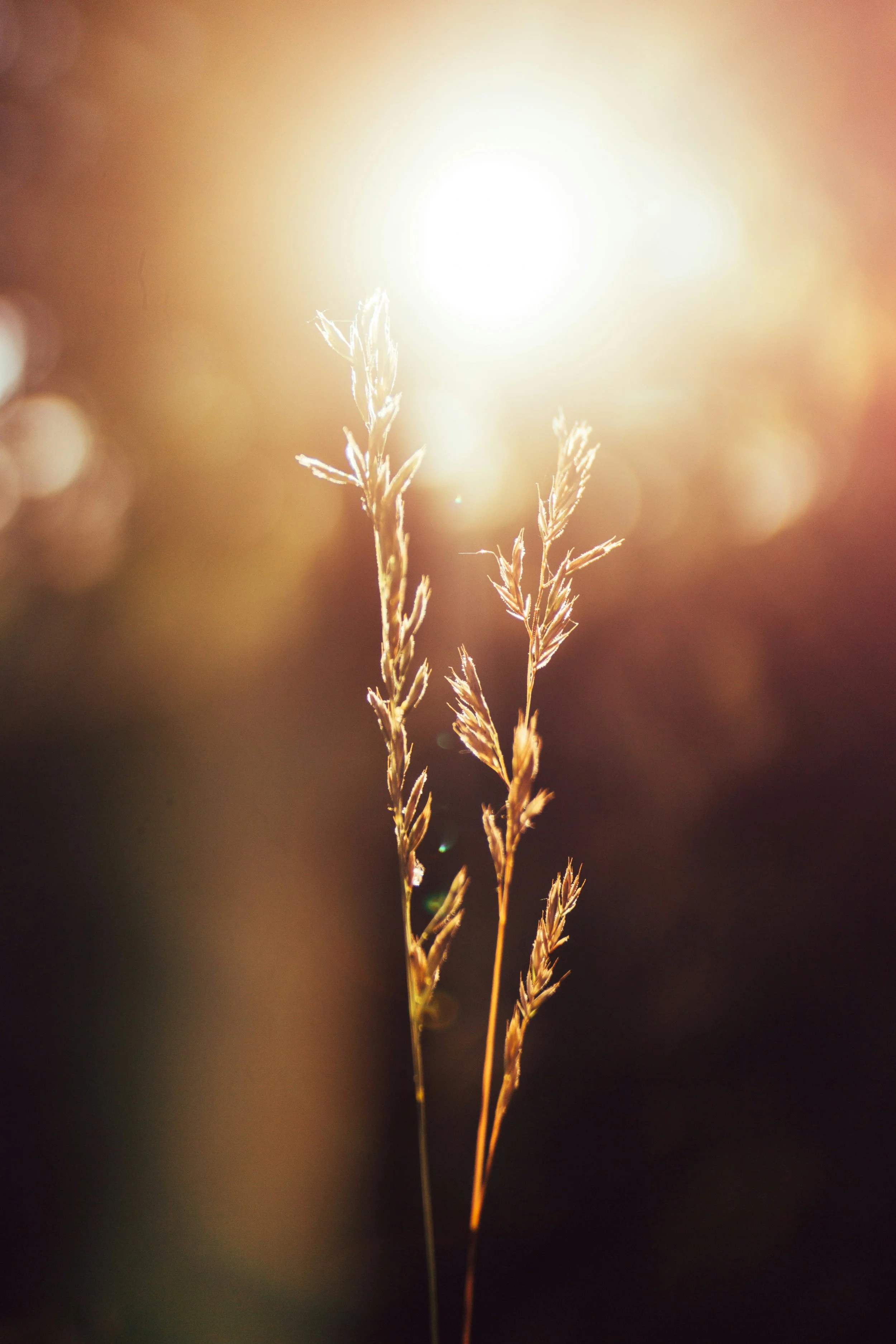
Umit Bulut, unsplash.com

As we approach Advent we reflect on waiting.

Who could EVER have imagined what was going to turn BC into AD.

When a few farm workers and three 

members of an obscure Persian sect

walked haphazard by starlight straight 

into the kingdom of heaven. 

-From BC:AD by U A Fanthorpe

Can we imagine what might be possible in our lives? What God can accomplish?

I said to my soul, be still and wait without hope,

For hope would be hope for the wrong thing; wait without love,

For love would be love of the wrong thing; there is yet faith,

But the faith and the love and the hope are all in the waiting.

Wait without thought, for you are not ready for thought: So the darkness shall be the light, and the stillness the dancing.

-East Coker from The Four Quartets, T.S. Elliot

This enigmatic poem suggests the need for emptying our mind of thought.

‘Be still and cool in thy own mind and spirit from thy own thoughts and then thou wilt feel the principle of God’ wrote George Fox in the 17th century.

Emptying our heart of hope, for how do we know what goodness and fulfilment may lie in another direction all together?

Is the music playing behind the door of despair? Patrick Kavanagh, poet

And what of faith, surely this is core to waiting? Is waiting evidence of these core elements of faith, hope and love; so that patient waiting allows the process of an unimaginable becoming.

Is silence the very foundation of waiting, the humus of growth? Is silence the doorway into stillness and awaiting and knowing?

Be still and know that I am God. Psalm 46:10

‘We came to know a place to stand in and what to wait in’ Frances Howgill, early Quaker 1618-1669

‘True silence…is to the spirit what sleep is to the body, nourishment and refreshment’ concluded William Penn (1644-1718)

Rosamond Robertson

The Coracle Trust is a scottish charity (number SC033358) and is regulated by the scottish charity regulator

Powered by Squarespace